Ensuring safety during insulation home improvements is of utmost importance. Before undertaking the project, it is important to pay special attention to safety issues.
Checking for Asbestos under your home:
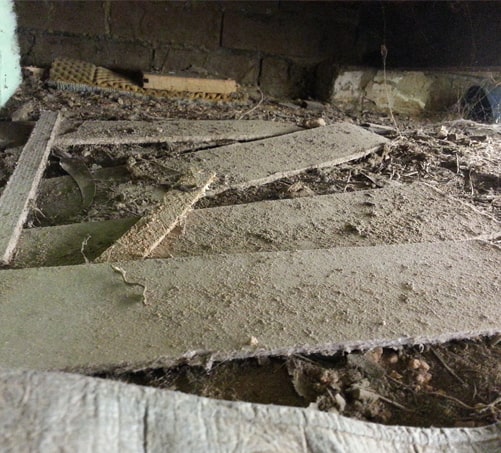
When undertaking the insulation project, it is crucial to be aware of the presence of asbestos under the floor. This is the most common risk associated with insulation home improvements. Simply removing the sheeting is not sufficient as asbestos fibres may be present in the soil and cannot be effectively removed. If you suspect or know that there is asbestos under your floor, it is important to get it tested through a simple and inexpensive process. By taking these safety measures, you can ensure a safe and successful insulation home improvement project.
Electrical Hazards:
Always ensure that the power is turned off during installation. Turn it on intermittently to check that you have not accidentally stapled a wire. If the electrical circuit shorts out when testing the power, call an electrician. Do not attempt to resolve the situation yourself.
One critical issue is where wires are saddled to the side of the joists. In such cases, the insulation should be pulled aside a little and stapled through into the floor, avoiding any risk of stapling the wire while ensuring an electrician can still access it.
If working in a ceiling space, it is more prudent to turn the electricity off while working in the attic space.
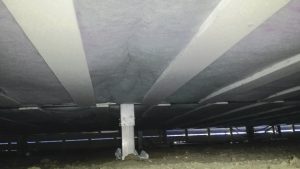
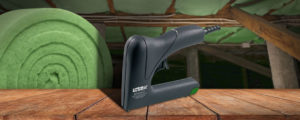
If stapling insulation underneath your floor, ensure there is an RCD installed, use a double insulated stapler (NOT A HAND STAPLER), and never work alone.
Tight, awkward working conditions
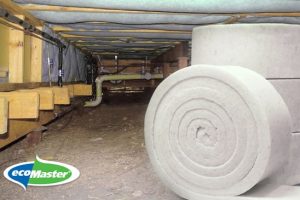
Subfloors are not designed for comfort. You may be crawling, twisting, lying on your back, dragging rolls of insulation, working around pipes, and trying to staple above your head. So the risks are physical:
- back, shoulder, neck and knee strain
- cuts from nails, sharp timber, metal strapping or rubble
- eye injuries from dust and debris
- getting stuck or panicked in a tight section
- fatigue, especially if you try to do too much in one session
The best guide is: Can I get under there, move safely, see what I am doing, get back out easily, and still have enough room to install properly?
Damp, mould and poor subfloor conditions
If the subfloor is damp, muddy, mouldy or smells musty, that is a warning sign. Installing insulation over a moisture problem does not fix the problem. It can make future access harder and may trap the issue out of sight. The risk is not just to the installer. Damp subfloors can also mean rot, mould, poor ventilation, drainage problems or timber decay.
Pests, rodents and unpleasant surprises
Under houses can contain pests of all sorts, nesting material, droppings, dead animals and sharp debris. This does not mean every subfloor is a wildlife documentary. But it does mean a DIYer should inspect first, not work alone, and not just charge in with a head torch and enthusiasm. In all the years we installed underfloor insulation, we never encountered possums, rats, mice or snakes. They are more scared on you, then you are of them. We did encounter one cranky wombat and her baby. Mum wombat was treated with great reverence and her baby slept on.
Pest control treatment:
If you are planning to have a pest treatment carried out, it is recommended that the insulation be done first to avoid crawling around on freshly laid chemicals.
How to Safely Test for Asbestos in and around Your Home
Here are the steps to test for asbestos fibres in soil:
Soil Testing:
A qualified asbestos expert can take a sample of the soil and send it to a laboratory for testing. The sample should be taken from the top 15 cm of soil, and multiple samples should be taken from different areas of the property.
Laboratory Testing:
The laboratory will analyze the samples using Polarized Light Microscopy (PLM) or Transmission Electron Microscopy (TEM). This process can take a few days, and the laboratory will provide a report of the results.
It is important to note that only qualified asbestos experts should conduct the testing as they have the necessary equipment and training to ensure the safety of everyone involved. If asbestos is found, it is important to hire an experienced asbestos abatement contractor to remove and properly dispose of the material.