
How to Install Underfloor Insulation
You’ve checked your home is suitable. You’ve chosen your insulation. You’ve measured your floor area and joist spacing.
Now comes the part that really matters: getting it installed properly.
Underfloor insulation only works well when it is fitted snugly against the underside of the floor and secured so it stays there. If it sags, gaps or falls away from the floorboards, you lose performance.
After crawling under a house to do the job, you really do want it done once and done properly.
This section will help you understand what a good installation looks like, what tools you may need, and which detailed guide to follow for your home.
The quick answer
A good underfloor insulation installation comes down to a few simple things.
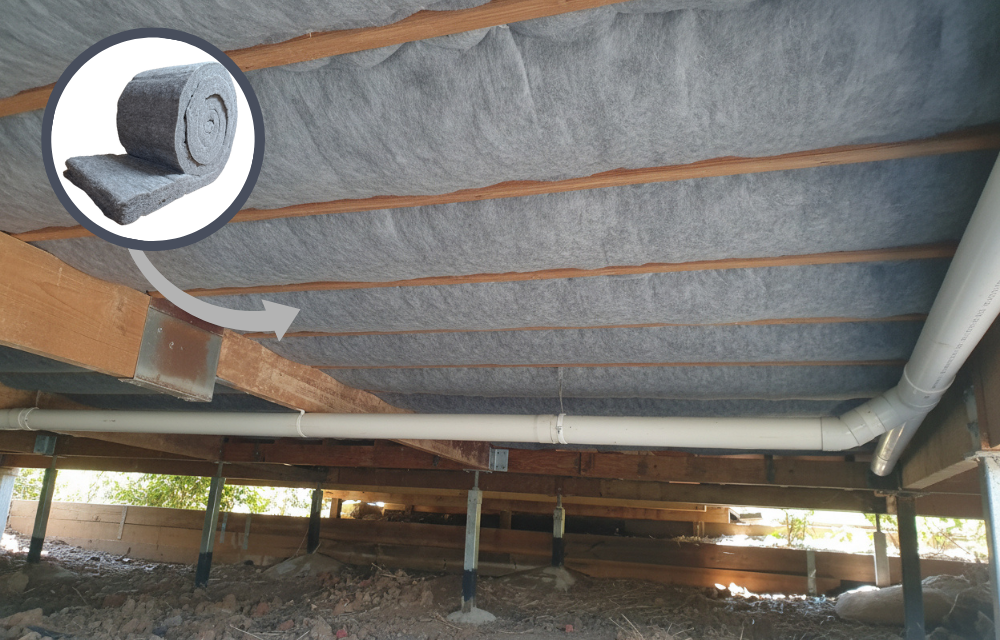
The insulation needs to be kept clean, fitted firmly between the joists, pushed right up against the underside of the floorboards, and stapled securely into place.
That is the heart of the job. Not dangling, sagging, gappy or having a little rest on the ground. Snug, secure and continuous.
Before you crawl under the house
Before you start, make sure the area is safe and workable. Remove sharp debris, check for obvious hazards, and make sure you have enough light, space, support and patience for the job. Always work with someone else present.
You’ll also want to think about how you’ll keep the insulation clean while you work. The installation guide recommends laying tarps between the stumps so the insulation does not get dragged through dirt before it is fitted.
If the subfloor is wet, unsafe, showing any exposed wiring, there are pests or sharp debris, stop and sort that first.
Tools you may need
You do not need a truckload of complicated gear, but you do need the right basics that that includes a headlamp, tarps, safety glasses (or swim goggles), a reliable double-insulated stapler and galvanised staples.
Polyester insulation is non-toxic, non-allergenic and non-irritant, so it is much nicer to work with than many traditional insulation materials.
The big one is the stapler. Please do not crawl under the house with a hand stapler and a heroic attitude. This is not the time for character building – it could be terminal. Seriously. No hand staplers.
You’ll also want to think about how you’ll keep the insulation clean while you work. The installation guide recommends laying tarps between the stumps so the insulation does not get dragged through dirt before it is fitted.
If the subfloor is wet, unsafe, showing any exposed wiring, there are pests or sharp debris, stop and sort that first.
The basics of the installation process
The basic process is simple, even if the job itself can be not the most pleasant activity.
First, prepare the underfloor area so you can move safely and keep the insulation clean. Then feed the insulation rolls under the floor but on the tarp. That keeps the insulation clean so dirt and sticks don’t fall on your face when you are installing. From there, you work along the joist bays, pressing the insulation up against the underside of the floorboards and securing it to the joists with staples. The insulation should not sit below the floor with a gap above it. Our guide is very clear that the insulation must fill right up to the floorboards, with no space left between the insulation and the floor. That contact matters. It is what helps the insulation do its job properly – if an installation goes ‘wrong’ – this is nearly always this.
Staple it properly
Stapling is what keeps the insulation where it needs to be. Lift the insulation against the floorboards and stapling it to the joists, with staples placed about every 100mm to 150mm on both sides of the joists. That might sound like a lot of staples. It is. But this is what stops the insulation from sagging away from the floor and undoing all your hard work. We installed underfloor insulation for nearly 20 years – that was 20,000 installations. We learnt a whole lot about how to install properly so you don’t have to do all your own research.
Work around wires, pipes and awkward bits carefully
Underfloor spaces are rarely perfect. You may find wiring, pipes, ducts or other obstacles in the way. The detailed guide advises caution around electrical wiring, especially avoiding stapling under wires and keeping wiring accessible rather than buried or pinned awkwardly behind insulation. If anything electrical looks unsafe, stop and get a licensed electrician involved before continuing.
What if the joist spacing is uneven?
Older homes love a surprise, and even some newer ones too!. Joists are not always perfectly spaced, and some areas may be narrower, wider or both! That does not necessarily mean the job cannot be done. It means you need to fit the insulation carefully so there are no gaps between sections. Here we need to employ the turn-and-tear method for irregular spaces. For some reasons, people seem to go to amazing lengths to avoid this technique. It is not difficult. It adds about 15% more time to the installation, but you end up with a neat, secure finish.
Please Do not use packing strap
Underfloor insulation needs proper support. If the insulation sags or drops away from the floor, it cannot perform as intended. This is why we do not recommend relying on packing strap as the main fixing method. It may look like a quick shortcut, but underfloor insulation needs to stay snug against the floorboards, not loosely slung underneath like a hammock.
Choose the guide that matches your home
Use the guide that suits your situation.
> Existing timber floor
If you are insulating an existing home from underneath, use the retrofit installation guide.
> New build
If you are building a new home and the floor is still open, follow the new-build guide.
> Major renovation
If the floorboards have been lifted during renovation, use the renovation guide.
> Steel joists
If your home has steel joists, you need the steel joist pathway.
When to stop installing underfloor insulation
DIY underfloor insulation is very doable in the right home, but not every subfloor is a DIY friendly workplace. There are (at least) three sets of circumstances when you should stop installing underfloor insulation and seek assistance.
What to do next
Once you understand how the insulation needs to be installed, you are ready to order the right product and installation gear.