Why Packing Strap Is Not Good Enough for Underfloor Insulation
Packing strap can look like a clever shortcut when you are installing underfloor insulation. It is cheap. It is easy to find. It seems simple enough: push the insulation up between the joists, run a few straps underneath it, staple the straps to the timber and move on.
Lovely in theory. Unfortunately, underfloor insulation does not live in theory. It lives under your house, where gravity, moisture, air movement, pests, time and the occasional enthusiastic wombat all get a vote. And packing strap is simply not a reliable way to hold underfloor insulation in place for the long term.
There are three main reasons we do not recommend it.
There are three compelling reasons to avoid using packing straps: they fail to provide sufficient support, they attract rodents by creating gaps, and they pose significant longevity and stability issues:
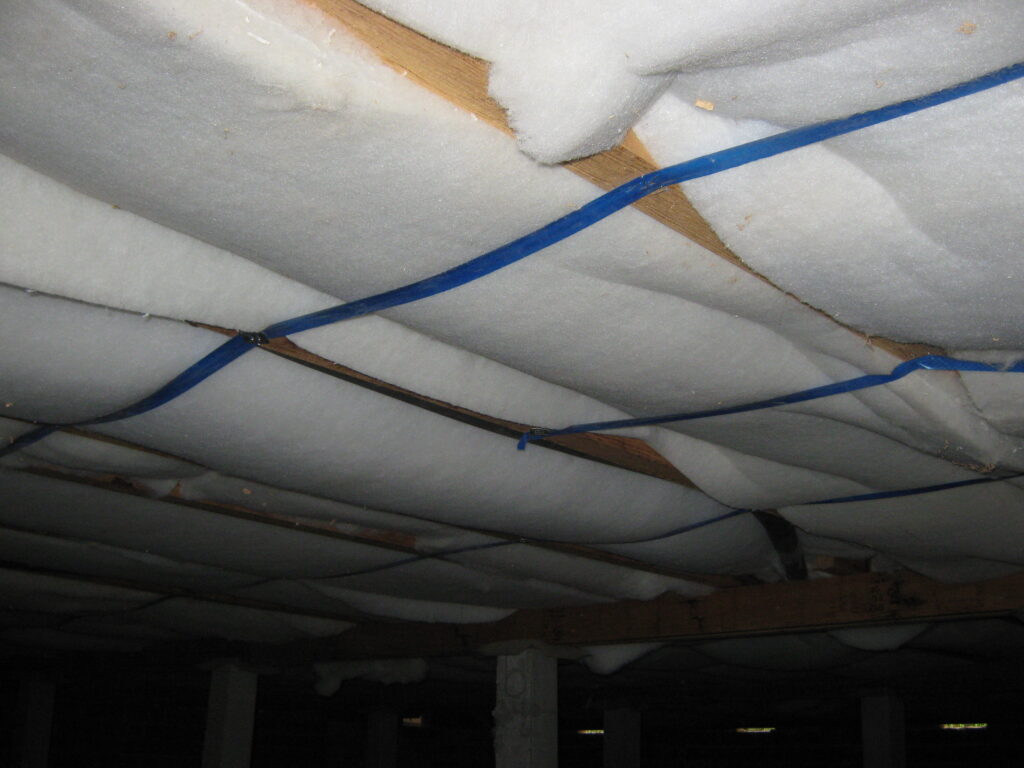
Reason #1: Packing Strap Does Not Provide Enough Support
The job of underfloor insulation is to sit snugly against the underside of your floorboards, filling the space between the joists without slumping, sagging or leaving gaps. That matters because insulation only works properly when it is in the right place.
Packing strap does not support the insulation evenly. It only holds it in a few narrow lines across the batt or roll. That means the rest of the insulation is relying on friction, hope and good manners to stay where it belongs.
But the real question is not whether it looks alright on day one. The real question is whether it will still be sitting hard up against the floorboards in six months, twelve months, or five years.
A typical underfloor insulation batt is long enough that two or three straps across it simply do not provide enough support. Over time, the insulation can start to belly between the straps. Once it begins to sag, the weight of the insulation pulls against the fixing points, the gaps get larger, and the whole installation starts to lose its shape.
Reason #2: Sagging Insulation Reduces Thermal Performance
Underfloor insulation is there to reduce heat loss through your floor. When insulation is held firmly against the underside of the floor, it helps slow the transfer of heat out of the room. When it drops away, you can end up with a cold air space between the floorboards and the insulation.
That air space can undo a lot of the benefit you were hoping to achieve. You may still have insulation under the house, but if it is hanging low, sagging in sections or leaving open channels between the joists, it is not giving you the result you expected.
Your floor can still feel cold. Your heating can still work harder than it should.
And you can be left wondering why the underfloor insulation did not make more difference. Often the answer is not the insulation product – it is the way it was installed.
This is why a cheap installation method can become very expensive. If the insulation is not held in the right place, it cannot do its job properly.
Reason #3: Loose Insulation Can Create Pest-Friendly Gaps and Costly Repairs
Polyester insulation itself is not a food source for rats or mice. But if the insulation is loosely installed, sagging, or full of gaps, it can create cosy little spaces that pests may find very interesting indeed.
A good underfloor installation should be neat, firm and boring. Boring is excellent. Boring means there are fewer gaps, fewer loose pockets and fewer inviting spaces for unwanted visitors.
A poor installation can do the opposite. Once the insulation starts to sag, you can get little ledges, hammocks and protected spaces where pests may decide to investigate, nest or generally make themselves more at home than anyone would like.
So no, packing strap does not “attract rodents” in the way a picnic attracts ants. But a loose, sagging, badly supported installation can make your subfloor area more pest-friendly than it needs to be. And nobody is installing underfloor insulation because they want to improve the local rodent lifestyle.
Oops! What If My Insulation Has Already Been Installed With Packing Strap?
If your underfloor insulation has been installed with packing strap and is still sitting firmly against the floorboards, you may not have an immediate problem. But it is worth keeping an eye on it.
If it has started to sag, drop, belly between straps or leave gaps above the insulation, it may need to be repaired. The repair method usually involves re-securing the insulation properly by stapling it into the sides of the joists at regular intervals. If any sections have been damaged, contaminated or pulled apart, those sections may need to be replaced.
Before you crawl under the house, always make sure the subfloor area is safe.
Do not disturb asbestos.
Do not touch electrical wiring.
Do not work in areas with standing water, mould, unsafe clearances, pests or damaged timbers.
If anything looks unsafe, stop and get the right professional involved.
If You Are Comparing Quotes, Ask This Question
If someone gives you a quote for underfloor insulation, ask them how the insulation will be held in place. Ask specifically:
Will the insulation be stapled into the sides of the joists along both sides, or will it be held up with packing strap?
That one question can explain a lot about the price difference between quotes. A proper stapled installation takes more time, but it gives your insulation a much better chance of doing what it is meant to do for years to come.
The Bottom Line
Packing strap looks like a cheap and easy way to install underfloor insulation. But underfloor insulation needs more than a few straps and crossed fingers. It needs to be held firmly, evenly and permanently in place so it can keep doing its job. Once insulation starts sagging away from the floorboards, you can lose thermal performance, create pest-friendly gaps and end up with a repair job that costs far more than the shortcut saved. So when it comes to underfloor insulation, skip the packing strap. Staple it properly.
Your floors, your heating bill and your future self will all be much happier.